Triads Worksheet – Level 1
For each chord symbol, write the three notes of the triad as letter names (root, third, fifth), then draw them on the staff as a stacked chord. Use sharps and flats where the key requires them. Check your answers with the answer key and play each chord if you can.
A. Write the notes of each chord
- C
- Dm
- C
- D
- F
- Fm
- F
- Fm
- Em
- Am
B. Name the chords on the staff
Answer key
Show the answers
- C: C E G
- Dm: D F A
- C: C E G
- D: D F♯ A
- F: F A C
- Fm: F A♭ C
- F: F A C
- Fm: F A♭ C
- Em: E G B
- Am: A C E
- G
- D
- Bm
- Em
- G
- F
- G
- C
Goal
Spell any major or minor triad quickly and correctly. This is the foundation for understanding chords, progressions and arpeggios.
How to practise
- A triad uses every other letter: C–E–G, D–F–A, E–G–B. Write the letters first, then fix the accidentals.
- Major triad: major third (4 semitones) + minor third (3 semitones). C–E–G.
- Minor triad: minor third (3) + major third (4). C–Eb–G.
- Shortcut: the major triad uses notes 1, 3 and 5 of the major scale of the root. For minor, lower the third.
- Do half the chords, check them, then do the rest.
Self-check
Compare with the key. Then play or listen to each chord in the chord builder. Major should sound bright, minor darker. If one sounds wrong, recheck the third.
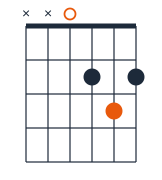
D Major Chord (D)
D – F♯ – A
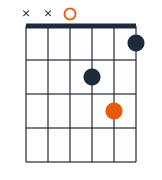
D Minor Chord (Dm)
D – F – A
Next steps
Read the triads lesson and continue with triads level 2, which adds diminished, augmented and suspended chords and inversions.