Seventh-Chord Arpeggios for Bass
Each chord is shown on C in two shapes: shape 1 with the root on the E string (fret 8), shape 2 with the root on the A string (fret 3). Play every arpeggio up and down in quarter notes with a metronome, say the chord tones as you play (1, 3, 5, 7), then move the shapes to other roots.
Arpeggio: Cmaj7
Arpeggio: C7
Arpeggio: Cm7
Arpeggio: Cm7♭5
Arpeggio: Cmaj7
Arpeggio: C7
Arpeggio: Cm7
Arpeggio: Cm7♭5
Goal
Know the four seventh chords that make up most of jazz, soul and pop harmony, and be able to outline each one anywhere on the neck. Only one note changes between neighbouring chord types, so learn them as a family.
| Chord | Formula | Notes on C |
|---|---|---|
| maj7 | 1 3 5 7 | C E G B |
| 7 | 1 3 5 b7 | C E G Bb |
| m7 | 1 b3 5 b7 | C Eb G Bb |
| m7b5 | 1 b3 b5 b7 | C Eb Gb Bb |
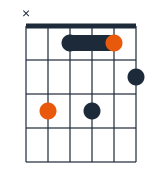
C – E♭ – G♭ – B♭
How to practise
- Metronome at 60–80 BPM. Play each shape up to the octave and back down.
- Play the four chords in a row on the same root and listen to the one note that changes each time.
- Move both shapes through the cycle of fourths: C, F, Bb, Eb...
- Mix them: Cmaj7 shape 1, then Fmaj7 shape 2 on the same frets area. Two shapes let you stay in one position.
Self-check
Can you name every note of each arpeggio? Can you play any of the four types from any root without the tab within a few seconds?
Next steps
Read the bass arpeggios lesson and seventh chords, revise the triads in bass arpeggio exercises, and use the shapes in walking over ii–V–I and the 12-bar blues in F.